
Summer Wedding Guest Jewellery: How to Style Gemstone Pendants with Pastels
A seasonal guide to pairing gemstone pendants with pastel wedding guest outfits — choosing stones by...

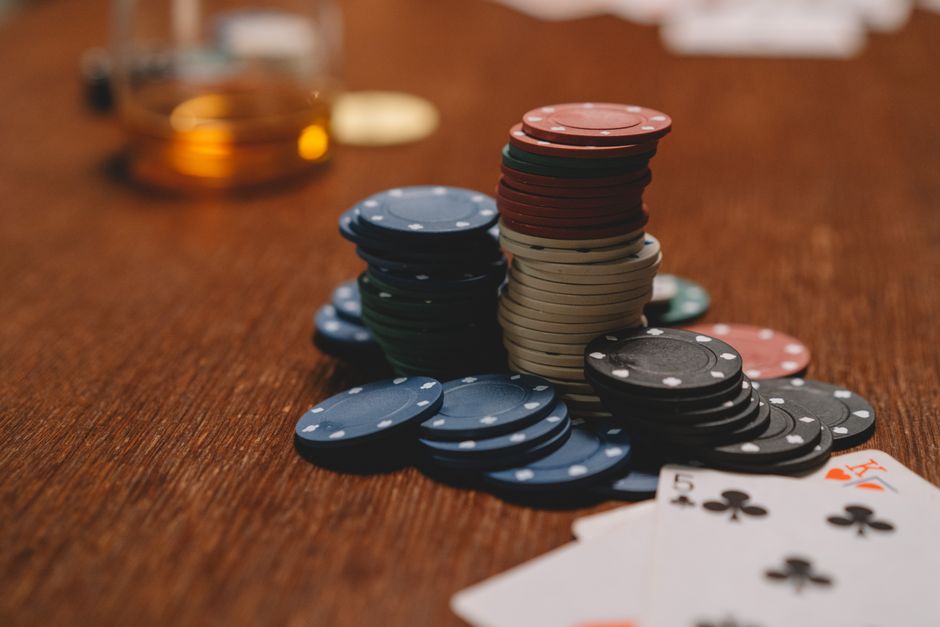
Most players lose track of the real reason they stopped having fun. It rarely happens at the tables—it happens in the banking app. iGaming gets a bad reputation partly because of the casino, but more often because nobody sat the new player down and walked them through the unglamorous arithmetic of surviving variance. We are going to fix that. Not with vague warnings, but with numbers, systems, and the same approach professionals use whether they are grinding a poker tournament or spinning £0.50 slots on a Tuesday night.
The single biggest error in online gambling is treating your salary, savings, and betting balance as one pot. That is how a quiet evening turns into a nightmare. A working bankroll is money you have already decided you can lose, ring-fenced in a separate e-wallet or prepaid card. If it disappears, your rent is still safe and your relationships are untouched.
A practical split looks like this:
If your monthly entertainment budget is £200, your gaming bankroll might be £20. Yes, that sounds small. It is also survivable. A £20 bankroll spinning £0.20 slots gives you a hundred spins—enough real play to experience bonus rounds, free spins, and the mathematical shape of a session. Pouring £200 in to “make it interesting” simply accelerates the same outcome.
Different products have wildly different volatility, and treating them as interchangeable is expensive. Slots usually sit between 94% and 97% return to player (RTP). A classic 96% slot loses roughly £4 of every £100 wagered long-term. Some jackpot and Megaways titles slice RTP down to 94% at the top end—and variance means a 200-spin dry spell is entirely normal, even at full RTP.
Blackjack with basic strategy sits north of 99.5% RTP. That is not a goldmine—you still grind downward—but it is dramatically softer than most slots. Poker is a different animal altogether: you play against other humans, and a decent player can actually hold a positive expectation over time. The catch is selection. A sharp recreational player at a soft £1/£2 table has an edge; the same player at a £5/£10 table full of regs is the fish.
A useful starting framework:
You will rarely hear a streamer say this, but “spinning down a level” is one of the most underrated survival tools in iGaming.
Welcome offers are seductive in exactly the same way cheap gym membership is. The headline number—typically a matched deposit up to £100–£300—is not the value. The real figure is hidden in the wagering requirement. A 100% match up to £100 with a 40x wagering requirement means you must gamble £4,000 before you can touch the bonus money, and the bonus alone is only worth around £96 at full 96% RTP.
Compare that to a 20x requirement and the same £100 suddenly becomes far more playable. Before you accept any bonus, check three things: You can read more about it on mahjong ways.
Reasonable players decline bonuses that clamp their freedom. The value of an unrestricted cash bankroll is often higher than a locked £100 “gift.”
Cash game poker is measured in big blinds per hundred hands, abbreviated BB/100. A strong micro-stakes winner might average 5 – 10 BB/100. That means at £1/£2, playing 200 hands in an evening, an excellent player expects roughly £20 profit. Not because they are lucky, but because the edge is thin and the rake—often 5% capped at £3 per pot—eats a huge share of the win rate.
Tournament poker is even more variance-heavy. A skilled player might cash in 12–15% of fields and reach the final table in 1–2%. The correct strategy is not to win every session; it is to enter tournaments where the buy-in is at most 1–2% of your total bankroll and register with volume so that skill has a chance to express itself across dozens, then hundreds, of results.
Humans are pattern machines. Three winning sessions in a row feel like talent; four losing ones feel like the casino rigged the shuffle. Both are false. Online slots alone generate millions of spins monthly at reputable operators, and any given night is one blue dot in that ocean. The way to outlive variance is brutally simple: play at stakes where it cannot hurt you, within a bankroll you have already written off.
Set hard limits using the tools operators now legally provide—deposit limits, session reminders, time-out features, and self-exclusion. The best gamblers treat these as equipment, not punishments. The second-best players learn them the hard way.
Casino and betting entertainment rests on a simple trade: you are paying for a session of uncertainty with a realistic expectation of a small loss, and every now and then the maths pays you back. Slots, blackjack, and poker all offer glimpses of the same mathematical engine from different angles. iGaming stops being dangerous the moment you stop treating it as a source of income, and becomes enjoyable the moment you treat it like the cinema: you buy a ticket, you enjoy the show, and you go home with your life exactly where you left it.
Keep the bankroll separate. Size your bets against your sessions. Read the small print on bonuses. Let volume rather than luck do the deciding. Do that and you will still be spinning—or shuffling up—years from now, when the impulsive players who ignored the boring arithmetic have long since reloaded one final time.
A seasonal guide to pairing gemstone pendants with pastel wedding guest outfits — choosing stones by...
A practical UK guide to buying gemstone bracelets, comparing high street shops and online sellers on...
A practical beginner's guide to choosing gemstone earrings — which metals suit sensitive ears, how each...