Summer Wedding Guest Jewellery: How to Style Gemstone Pendants with Pastels
A seasonal guide to pairing gemstone pendants with pastel wedding guest outfits — choosing stones by...

A gemstone bracelet is a small purchase with more variables than it first appears. Two bracelets can look near-identical in a photograph and feel entirely different on the wrist. Where you buy one changes what you pay, how easily you get the fit right, and what happens if the colour is not quite what you hoped for.
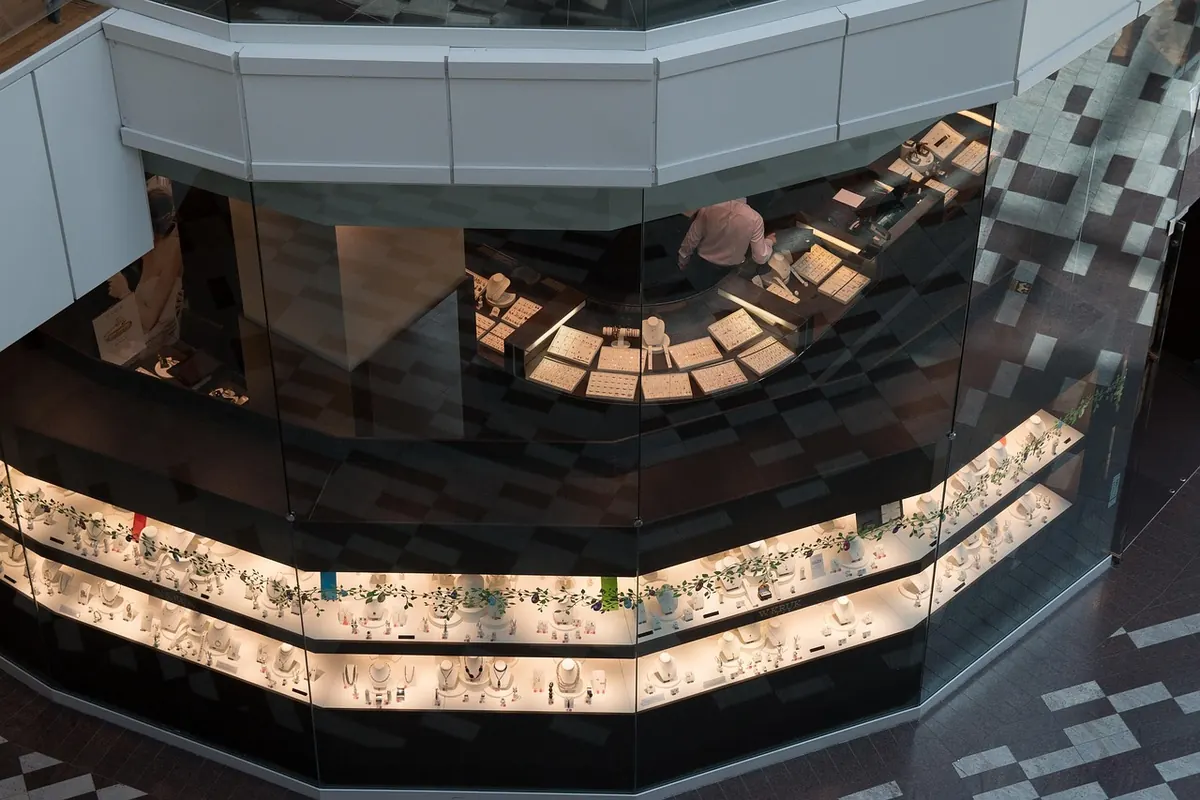
Gemstones are notoriously shy of shop lighting. Warm spotlights deepen amethyst and make citrine glow, which is why a bracelet can lose some of its life the moment you step outside. Buying in person lets you carry it to the window, hold it against your skin and see whether the stone flatters your complexion or fights it.
You can also check the things photographs rarely capture: the weight of the beads, the smoothness of the drill holes, whether the elastic feels taut, whether the clasp sits flat. If a seller cannot tell you whether a stone is dyed, heat-treated or simply glass, you find that out in conversation rather than in a refund queue.
The trade-offs are stock and overheads. A high street shop can only hold so much, so you may find one bead size in three colours rather than the reverse. Rent, staffing and display costs sit inside the ticket price, and a busy Saturday assistant may not have time for a long conversation about treatments.
Online sellers deal in breadth. If you want an 8mm charoite bracelet, or the same design in four bead sizes, that is a search rather than a quest. Independent makers, bead suppliers and the jewellery quarter trade all sell online, and prices are often lower because there is no shopfront to pay for. Secondhand marketplaces are worth a look too, particularly for vintage pieces with sterling clasps.
What you give up is certainty. Screens shift colour, and a bracelet photographed on white can look warmer or cooler than the real thing. Descriptions are written to sell, so "natural" sometimes means "natural-looking". Postage is rarely free both ways, and returns mean packaging, a trip to the post office and a wait.
Fit is the most common reason a gemstone bracelet ends up unworn. Measure your wrist with a soft tape just below the wrist bone, snug but not tight, and note the figure in centimetres. For a classic fit, add roughly 1–1.5cm; for a looser drape, add about 2cm.
These are the forgiving option. A standard adult size tends to sit around 18cm in circumference, so if your measurement lands between sizes, go up rather than down. Roll them on over your hand instead of stretching them, keep them away from chlorine and perfume, and expect the elastic to need restringing eventually — it perishes with wear.
Here, size matters more. Look for a listing that gives an actual measurement in centimetres rather than "small" or "medium", and message the seller if it is missing. A chain can usually be shortened by a jeweller, and extra links added to some designs, but that is an added cost and an added wait. For gifts, an adjustable or stretch piece is the safer choice.
This is where the two shopping routes diverge most sharply, and it is worth understanding before you pay rather than after.
Buying at a distance in the UK generally gives you a short cooling-off period — broadly 14 days from delivery to cancel, and a further window to send the item back — for standard stock items. Personalised, made-to-measure and some bespoke pieces are commonly excluded, and return postage is often your responsibility. Always keep tracked proof of posting.
In a physical shop, there is normally no automatic right to a refund simply because you changed your mind. Many retailers offer an exchange or credit note within a set period as a matter of policy, and some offer full refunds, but it is their choice. Ask at the till, and get the answer noted on the receipt.
Policies vary, so read the terms on the listing or ask in store, keep your receipt, and if a dispute arises, seek proper consumer advice rather than relying on what a forum says.
A few questions will tell you more than any product description.
Before you buy, either way, have these answers ready:
Use the high street as your showroom and the internet as your stockroom. Spend an afternoon trying on different bead sizes and stone colours so you know what suits your wrist, then buy online once you are confident about the fit and the seller. If you fall for something in a shop, ask about their exchange policy before you hand over the card — a good retailer will answer cheerfully.
Buy fewer, better bracelets. One well-strung piece in a stone you actually love will be worn for years; five impulse buys in colours that looked better on screen will sit in a drawer. Check the cord or elastic every few months, restring when it slackens, and take it off before swimming or gardening.
Wherever you buy, the bracelet you will reach for is the one that fits properly, feels pleasant against your skin and still looks right in ordinary daylight.
Photo: jarmoluk / Pixabay
A seasonal guide to pairing gemstone pendants with pastel wedding guest outfits — choosing stones by...
A practical beginner's guide to choosing gemstone earrings — which metals suit sensitive ears, how each...
A practical, stone-by-stone guide to cleaning gemstone rings at home, with safe tools, a five-minute...