Summer Wedding Guest Jewellery: How to Style Gemstone Pendants with Pastels
A seasonal guide to pairing gemstone pendants with pastel wedding guest outfits — choosing stones by...

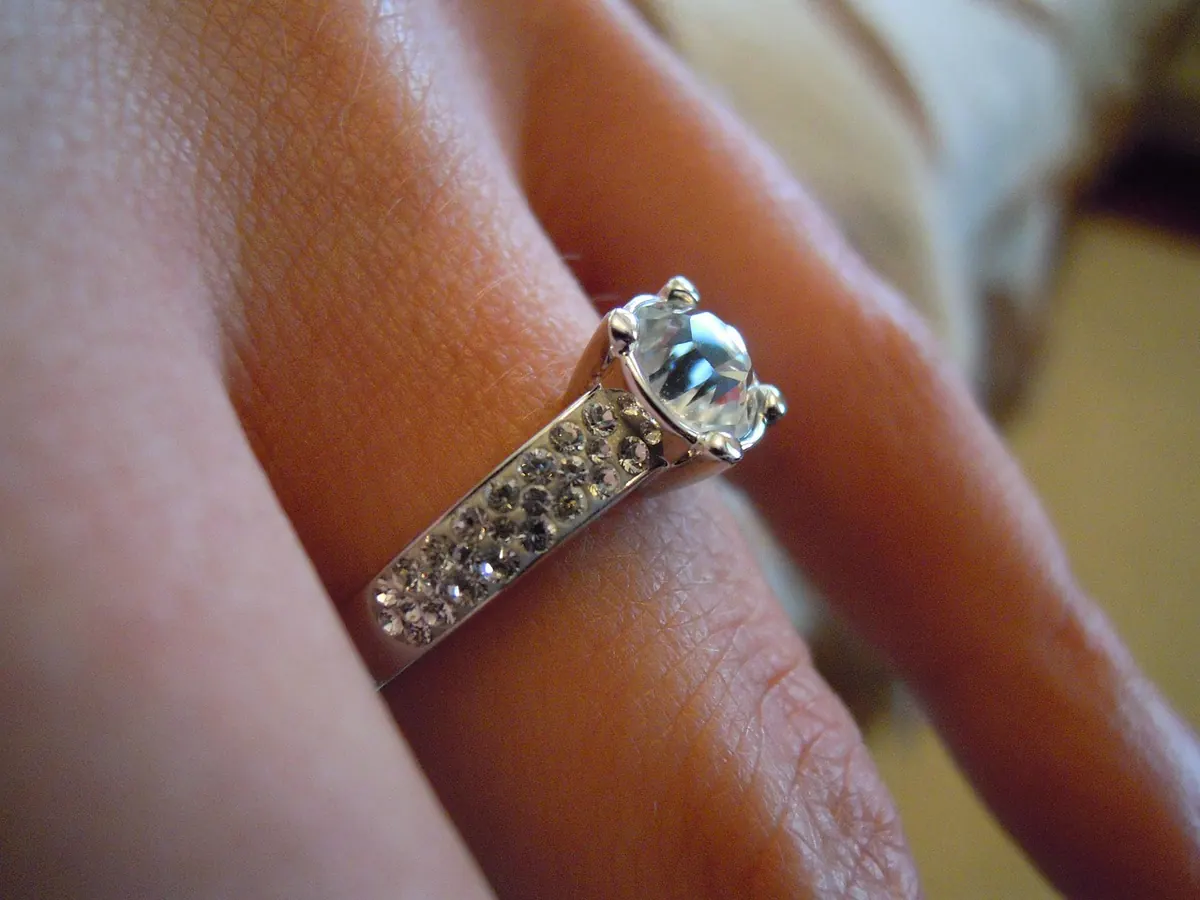
A ring has to work with the hand it sits on, not against it. Two people can try the same sapphire and reach opposite conclusions — on one hand the stone looks luminous, on the other it looks heavy and oddly placed. That is rarely about taste. It is proportion, scale and colour temperature doing quiet work in the background. All three can be judged before you spend a penny, and none of them requires you to follow a trend. Start by looking at your hand the way a jeweller does: length, width, knuckles, and the undertone of your skin.
Begin with a simple observation: how long are your fingers relative to your palm, and how much of the finger will the ring cover? A stone that looks generous on a longer finger can swallow a shorter one. Decide what you want the ring to do — lengthen, balance or make a statement — then let the cut and band follow.
A quick test at home: cut a paper circle or oval roughly the size of the stone you have in mind, lay it on your finger and look at your hand in a mirror at arm's length. If your eye goes straight to the paper and nothing else, the stone is too big for that finger. If you can barely find it, it is too small. The sweet spot is where stone and hand read as one shape.
You can carry width and length. Oval, emerald, marquise and pear cuts sit beautifully, and you can go larger in carat terms than someone with shorter fingers. Bands of 3mm and above suit you, as does stacking. Avoid overly dainty bands, which look lost and tend to twist.
You want vertical lines. Elongated cuts — oval, pear, marquise, elongated cushion — draw the eye up the finger. Keep the band slim, around 1.5–2.5mm, and choose a setting that sits low. A tall, chunky setting shortens the finger further, and a wide band creates a visual stop that does the same. If you love round stones, a round in a slender bezel usually flatters more than a high claw setting.
Look for a band that passes comfortably over the knuckle but stays snug at the base — a gently tapered or rounded band is often easier than a straight one. Very thin bands spin; a 2.5–3mm band with a low profile stays put. Softer outlines such as ovals and cushions balance a stronger knuckle line better than sharp-cornered cuts.
Band width is the most underrated decision in the whole process. It changes how the ring feels, how it wears and how the stone reads.
Setting height matters just as much. A low bezel or gypsy setting protects the stone and keeps the ring close to the finger, which flatters shorter hands. A high claw setting shows off a large stone and lets in more light, but it catches on clothing and can look top-heavy on a small hand. If you are hard on your jewellery, favour lower settings and harder stones.
Undertone is not the same as surface colour. Fair, medium and deep skin can each be warm, cool or neutral, and the undertone decides which metals and gemstones make your skin look clear rather than tired.
Shop lighting is warm and flattering to almost everything, so step outside with a ring before deciding if you can.
Yellow gold, rose gold and bronze tones sit naturally here. Think citrine, amber, garnet, warm orange-red rubies, morganite, peach sapphire and green tourmalines with a golden edge. Warm skin tends to make these glow rather than clash.
Platinum, white gold and silver are your home ground. Aquamarine, blue sapphire, tanzanite, amethyst, emerald and cool pinks such as rose quartz or pink sapphire look fresh and clear. Very yellow or orange stones can look muddy by comparison.
Neutral skin is easy to dress: most metals work and you can mix them. Olive undertones, often with a greenish or golden cast, look particularly good with deep, saturated colours — emerald, deep blue sapphire, ruby, black onyx and rich purple amethyst. Washed-out pastels can disappear.
Contrast matters as much as hue. If your skin and hair are low in contrast, a stone close in tone to your skin looks soft and elegant; if you want drama, choose one that sits a few steps away.
Sapphire, ruby and diamond are hard enough for daily wear. Emerald, amethyst, citrine, garnet and tourmaline are fine for rings worn with care, but chip more easily on a hand with prominent knuckles. Opal, pearl and moonstone are softer and better kept for occasions.
If you are stacking, keep hard stones away from softer ones, or separate them with a plain band. Ask about treatments, and about certification from a recognised laboratory if you are spending serious money. Confirm the returns window and resizing limits in writing before you commit — full eternity bands, in particular, are difficult to resize. For a purchase of real value, it is worth taking independent advice and arranging a valuation for insurance.
If two rings both look good, choose the one you forget you are wearing. A ring you have to fiddle with, that catches on sleeves or leaves a red mark by mid-afternoon, will spend more time in the box than on your hand. Fit and comfort are not the boring part of the decision — they are the reason a good ring becomes the one you reach for.
Photo: Wounds_and_Cracks / Pixabay
A seasonal guide to pairing gemstone pendants with pastel wedding guest outfits — choosing stones by...
A practical UK guide to buying gemstone bracelets, comparing high street shops and online sellers on...
A practical beginner's guide to choosing gemstone earrings — which metals suit sensitive ears, how each...